Updates - Building Safety 2026
Building Safety in Malaysia: A Shared Responsibility in Facility & Property Management
Introduction
Building safety is one of the most critical aspects of facility and property management. In Malaysia, the increasing number of high-rise residential, commercial, and mixed-development properties has heightened the importance of ensuring that buildings remain safe, functional, and compliant with statutory requirements.A safe building not only protects occupants and assets but also enhances property value, reduces liability risks, and promotes confidence among residents, tenants, investors, and stakeholders. Effective building safety management requires continuous monitoring, preventive maintenance, regulatory compliance, and active participation from all parties involved.
Understanding Building Safety
Building safety refers to the measures and practices implemented to ensure that a building can be occupied and operated without posing risks to the health, safety, and wellbeing of its users. This encompasses various elements, including:·
Structural integrity·
Fire safety systems·
Electrical safety·
Mechanical systems reliability·
Security management·
Emergency preparedness·
Occupational safety and health
Environmental health standards
In the context of facility and property management, building safety extends beyond merely complying with regulations. It involves proactively identifying risks and implementing measures to prevent accidents, disruptions, and property damage.
Regulatory Framework in Malaysia
Several laws and regulations govern building safety in Malaysia, including:
1. Strata Management Act 2013 (Act 757)The Act places responsibility on Joint Management Bodies (JMBs), Management Corporations (MCs), and property managers to properly maintain and manage common property within strata developments.
2. Fire Services Act 1988Administered by the Fire and Rescue Department of Malaysia (BOMBA), this legislation requires buildings to maintain functional fire protection systems and comply with fire safety requirements.
3. Occupational Safety and Health Act (OSHA)The Act promotes a safe working environment for employees, contractors, and service providers operating within building premises.
4. Electricity Supply Act and RegulationsElectrical installations must be maintained by competent persons and inspected regularly to ensure safety and compliance with requirements imposed by Suruhanjaya Tenaga.
5. Uniform Building By-Laws (UBBL)The UBBL establishes minimum requirements for building design, fire protection, means of escape, accessibility, and safety features.
Key Building Safety Components
Fire Safety Management
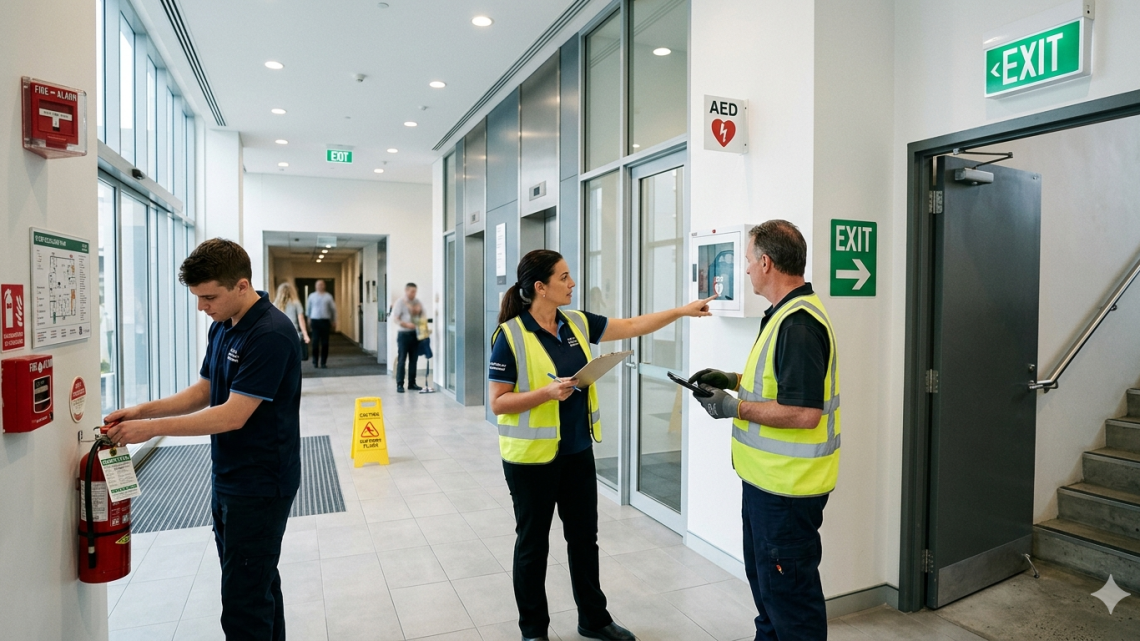
Fire safety remains one of the most important elements of building management. Property managers should ensure:·
Fire alarm systems are operational.·
Fire extinguishers are inspected regularly.·
Hose reels and hydrants are maintained.·
Emergency lighting functions properly.·
Fire escape routes remain unobstructed.·
Fire drills are conducted periodically.
Regular inspections and preventive maintenance can significantly reduce fire-related risks and improve emergency response readiness.
Electrical Safety
Electrical failures are among the leading causes of building incidents. Proper electrical safety management includes:·
Scheduled inspection of switchboards and distribution panels.·
Thermographic scanning to identify overheating components.·
Testing of earthing systems.·
Preventive maintenance of generators and UPS systems.·
Compliance with Suruhanjaya Tenaga requirements.
Buildings with high electrical loads should engage competent electrical personnel to oversee system performance and safety.
Lift and Escalator Safety
Lifts are critical facilities in high-rise developments. To ensure user safety:·
Maintenance should be carried out by licensed contractors.·
Regular inspections must be conducted.·
Emergency communication systems should be functional.·
Lift rescue procedures should be established and practiced.Any unusual noises, vibration, or operational issues should be addressed immediately.
Structural SafetyBuilding structures deteriorate over time due to weather exposure, material ageing, and usage patterns. Property managers should monitor:·
Cracks in structural elements.·
Water seepage and concrete deterioration.·
Corrosion of reinforcement steel.·
Settlement or movement of building components.
Periodic condition assessments help identify issues before they become major safety concerns.Water System SafetySafe water systems are essential for occupant health. Management should ensure:·
Water tanks are cleaned regularly.·
Water quality testing is conducted.·
Pumps and piping systems are maintained.·
Leakages are repaired promptly.
Proper maintenance prevents contamination and ensures uninterrupted water supply.
Security and Access Control
Modern building safety includes security management measures such as:·
CCTV surveillance systems.·
Access card controls.·
Visitor management procedures.·
Security patrols.·
Emergency response protocols.
A secure environment reduces the likelihood of theft, vandalism, and unauthorized access.The Importance of Preventive Maintenance
Preventive maintenance is a cornerstone of building safety. Rather than waiting for equipment failure, facility managers should implement planned maintenance programmes to:·
Extend asset lifespan.·
Reduce unexpected breakdowns.·
Improve reliability of critical systems.·
Lower repair costs.·
Enhance occupant safety.
A well-maintained building is generally safer, more efficient, and more attractive to residents and tenants.
Emergency Preparedness
Every building should have an Emergency Response Plan (ERP) that addresses:·
Fire emergencies·
Power failures·
Flooding incidents·
Gas leaks·
Medical emergencies·
Security threats
Building occupants should be familiar with evacuation procedures, assembly points, and emergency contact information.
Regular emergency drills help improve preparedness and minimise confusion during actual incidents.
The Role of Property Managers
Property managers play a pivotal role in ensuring building safety. Their responsibilities include:·
Coordinating maintenance activities.·
Ensuring regulatory compliance.·
Managing service contractors.·
Conducting safety inspections.·
Maintaining safety records.·
Educating occupants on safety practices.·
Managing emergency situations.Through proactive management, property managers can significantly reduce risks and create a safer living and working environment.
Conclusion
Building safety is not merely a regulatory obligation; it is a fundamental responsibility that protects lives, assets, and investments. In Malaysia’s evolving property landscape, effective facility and property management practices are essential to ensuring that buildings remain safe, sustainable, and resilient.Achieving a high standard of building safety requires collaboration among property owners, management bodies, facility managers, contractors, residents, and regulatory authorities. Through regular inspections, preventive maintenance, compliance with legislation, and continuous improvement initiatives, building stakeholders can create safer and more sustainable communities for everyone.